ALEXANDRE CABANEL (1808—1879) The Birth of Venus. 1863, panel, oil, 73 x 60 cm.
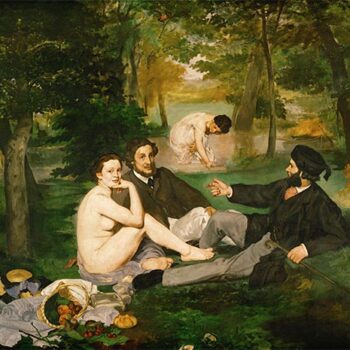
A. Cabanel successfully and even brilliantly followed the typical path of an official school artist: the Grand Prix de Rome upon graduating from the Academy, a trip to Italy, then a professorship and an academic workshop, official commissions, a permanent place at the Salon exhibitions. Cabanel’s carefully and rule-abidingly constructed historical compositions, his refined, “engraving-like” drawing, and smooth painting always elicited approval from the public and critics and were considered the norm of good taste. The painting The Birth of Venus from 1863 was exhibited at the Salon, which became famous for the scandal surrounding Édouard Manet’s The Luncheon on the Grass — an opponent of academicism: the jury rejected his work, considering it “indecent.” And Cabanel’s Venus was a great success; it was purchased by Emperor Napoleon III himself. But here is what Émile Zola, a friend and like-minded supporter of Manet and his circle, wrote about Cabanel’s masterpiece: “The goddess, immersed in the waves of a milky river, looks like a charming courtesan, but not made of flesh and bone — that would be indecent — but of white-pink almond paste.”
Back to Epic
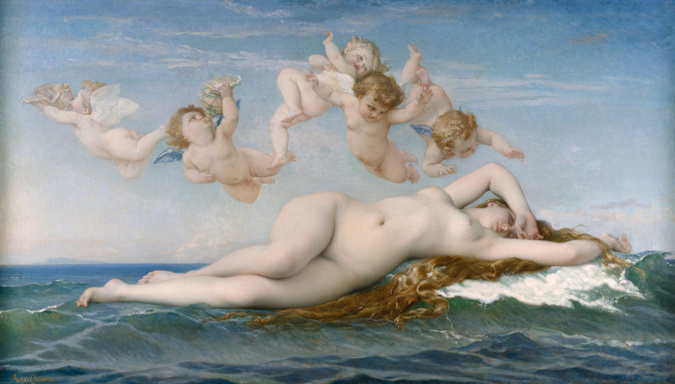
The Birth of Venus
2000 €
Buyer protection
Safe shopping
Easy returns and refunds
Free shipping worldwide
| Atributes | ALEXANDRE CABANEL (1808—1879) The Birth of Venus. 1863, panel, oil, 73 x 60 cm. |
|---|